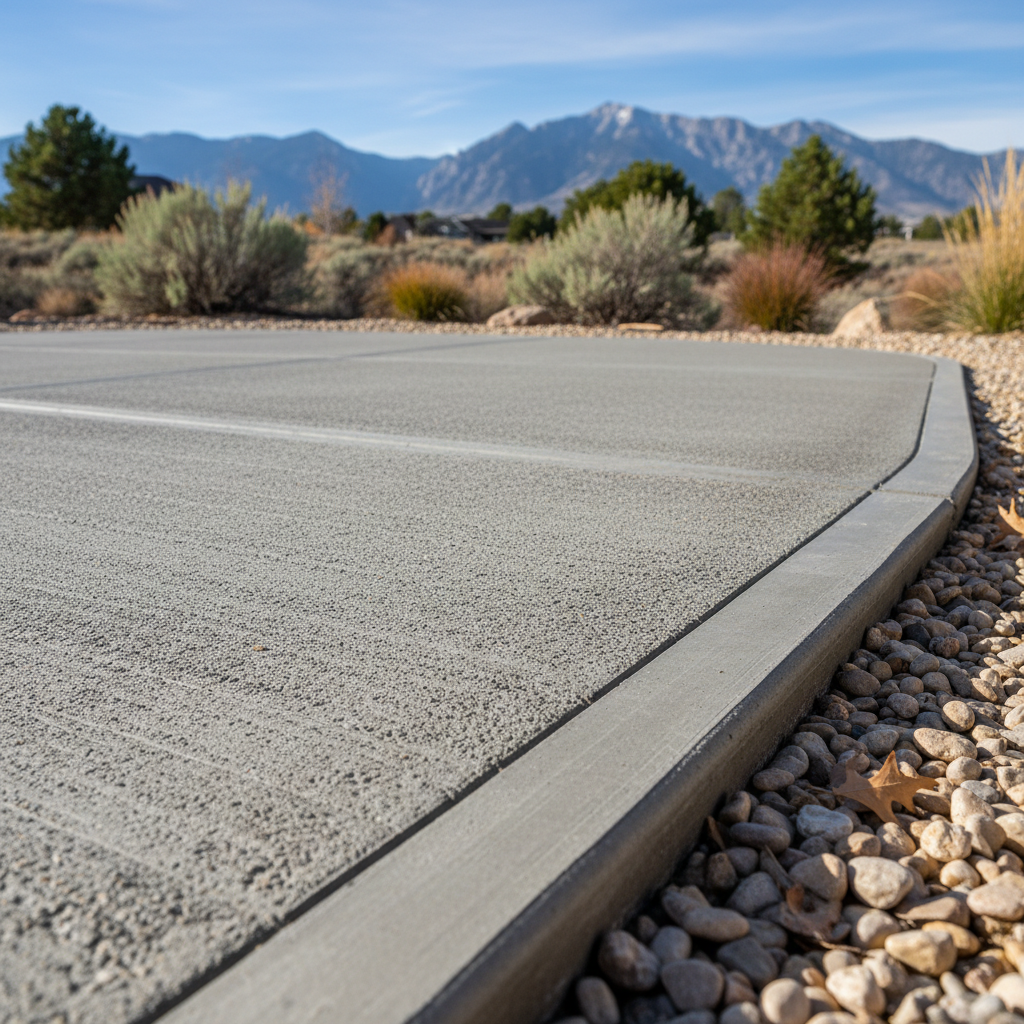
Ever stared at a crumbling backyard slab and wondered if you could just mix a few bags from the hardware store and fix it yourself? Around Sandy, Utah, our heavy clay and sandy loam soils take a real beating from the freeze-thaw cycles we experience every winter, leaving plenty of homeowners wanting to take matters into their own hands. But before you rent a mixer and start throwing lumber around, let us break down what actually goes into a successful flatwork project, what you can handle, and when it is time to call in a crew like Sandy Concrete Solutions.
Before the Pour: Groundwork and Prep
Getting ready for concrete flatwork is not just about clearing out weeds. If you live closer to the benches where the ground drops off or down in the valley where clay holds moisture, your sub-base is everything. Skip this step or rush the compaction, and your brand-new slab will crack the first time the temperature swings hard.
- Excavating the organic topsoil down to stable ground.
- Laying and tamping down several inches of road base gravel.
- Setting forms with proper slope so water drains away from your foundation.
If you are tackling a small 3-by-3-foot landing pad for your back steps, you can probably dig and gravel that yourself over a Saturday morning. Anything larger, like a full driveway or a sprawling backyard space, requires heavy equipment to get that base packed tight enough to prevent shifting.
During the Project: Pouring and Finishing
Once the truck shows up, the clock starts ticking fast. Concrete does not wait for anyone, especially when our dry Utah air starts pulling moisture out of the mix before you have even finished screeding.
Spreading and leveling wet concrete takes muscle, coordination, and timing. If you miss the window for edging and joint control, you will end up with a messy surface that cracks wherever it feels like instead of along neat control joints. At Sandy Concrete Solutions, we see do-it-yourself projects go sideways right here because managing a yard of concrete by yourself is a punishing job.
After the Pour: Curing and Sealing
Pouring the concrete is only half the battle. How you treat it over the next week dictates whether it lasts thirty years or starts scaling by next spring. Keep it moist for a few days so it can achieve its actual strength, and do not park a heavy vehicle on a new driveway too soon. Once it is fully dried out, get a quality sealer rolled on to block out winter moisture and de-icing salts.