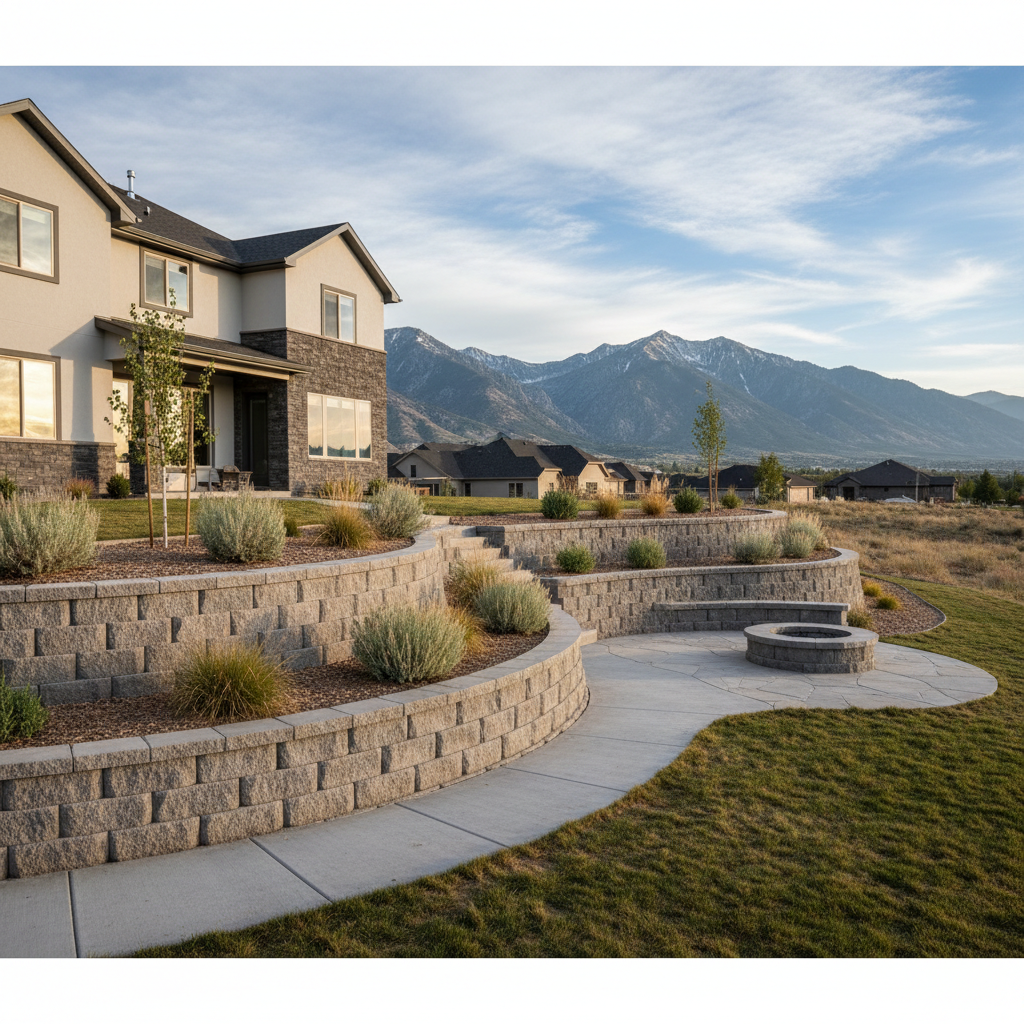
So, you're thinking about putting in a retaining wall. Maybe your yard in Willow Creek has a bit of a slope, or you're trying to carve out some more usable space in your backyard up near Little Cottonwood Canyon. Whatever the reason, a concrete retaining wall is a solid, long-lasting choice. But let's be real, it's not a small job. As someone who's built more than a few of these around Sandy, I can tell you that a little planning really helps. Let's dig into what you'll need to know.
Your Project Timeline: What to Expect
Don't expect a retaining wall to magically appear overnight. From your first phone call to the final check, this project has quite a few steps, and each one takes some time. Here's a rough idea of how it usually breaks down:
- Initial Chat & Design (1-3 weeks): This is when you meet up with a contractor, like us at Sandy Concrete Solutions. We'll check out your property, chat about what you need, and figure out the best design. Often, especially for taller walls or those close to property lines, you'll need engineering drawings, which can add an extra week or two.
- Permitting (3-8 weeks, or even more): This part is usually the longest, and it can really vary. Sandy City has specific rules for retaining walls, especially if they're taller than a certain height (often 4 feet) or near your property boundaries. You'll definitely need permits, and sometimes a structural engineer has to sign off on the plans. Don't, for goodness sake, skip this step; it's super important for your safety and your property's value.
- Material Order & Scheduling (1-3 weeks): Once we have those permits, we'll order all the materials and get you on the schedule. Concrete for a retaining wall isn't something you just grab off the shelf at Home Depot; it's often custom-mixed and delivered right to the site.
- Construction (1-4 weeks): This is the actual building time. It involves digging, foundation work, putting in rebar, setting up forms, pouring the concrete, and letting it cure. The size and how complicated your wall is will decide how long this takes. Oh, and the weather plays a big part too – we can't pour concrete in a blizzard, can we?
- Curing & Backfilling (1-2 weeks): Concrete needs time to get to its full strength. After that, we'll backfill and finish the area around your new wall.
All told, you're usually looking at a 2-4 month process from start to finish. Planning ahead, especially for those permits, makes all the difference.
What Happens During the Build?
Once we get going, here's a general idea of what you'll see:
- Site Prep & Digging: We'll mark where the wall goes, clear out any plants, and dig the trench for the footing. This can get a bit messy, especially if we hit some of that hard, rocky soil we often find in the foothills around here.
- Footing & Rebar: A strong retaining wall really needs a strong foundation. We'll put down a gravel base, install the rebar (those steel reinforcement bars) for the footing, and then pour the concrete for it.
- Forming the Wall: After the footing sets up, we'll build wooden forms for the wall itself. More rebar goes in here, hooked into the footing's rebar, to give the wall its strength.
- Pouring the Wall: This is the big day. A concrete truck will bring the mix, and we'll pour it into the forms. This is a skilled job; you have to make sure the concrete gets vibrated correctly to get rid of air bubbles and create a dense, strong wall.
- Curing & Finishing: Once the concrete hardens, we'll take off the forms. The wall then needs to cure, which means keeping it moist for a while so it gets as strong as possible. After that, we backfill behind the wall, making sure the drainage is set up right to stop water pressure from building up.
It's a process, sure, but watching a well-built wall come together is pretty satisfying.
How to Prepare Your Property
Before the crew shows up, you can do a few things to make everything run smoother:
- Clear the Area: Move any outdoor furniture, planters, or anything else that might be in the way of the construction zone.
- Mark Utilities: Call 811 (Dig Alert) before any digging starts. Seriously, this isn't optional. They'll mark public utilities, but you're responsible for marking any private lines you have (like sprinkler systems, gas lines to a BBQ, or landscape lighting).
- Access: Make sure there's a clear path for equipment and concrete trucks. Sometimes, we need to get some pretty big machines into tight spots.
- Talk to Neighbors: If the wall is going to be close to your property line, give your neighbors a heads-up about what's happening. A little communication can save a lot of trouble.
- Plan for Disruption: There will be noise, dust, and equipment. It's only for a little while, but it's good to be ready for it.
Questions to Ask Before You Sign
Before you commit to a contractor, make sure you have answers to these questions:
- What's included in the price? Does it cover digging, materials, labor, backfilling, and cleanup? What about permits and engineering fees? Get it all in writing.
- What's your experience specifically with retaining walls? Not all concrete work is the same, you know. Ask to see examples of their retaining wall projects.
- Are you licensed and insured? Don't even think about hiring someone who isn't. Ask for proof of both.
- How do you handle drainage? This is super important for how long a retaining wall lasts. A good contractor will explain their drainage plan (gravel, weep holes, French drains, etc.).
- What's the payment schedule? A good contractor won't ask for all the money upfront. Usually, it's a deposit, then payments as work progresses, and a final payment when everything's done.
- What kind of warranty do you offer on your work? A reliable contractor stands behind what they build.
- How long will the project take, and how will you keep me updated? You'll want to know who to call if you have questions while the build is happening.
Asking these questions will help you find the right team for your project. A concrete retaining wall is an investment, and you want it done right. If you're in Sandy and thinking about a wall, give us a call at Sandy Concrete Solutions. We're always happy to talk through your options.