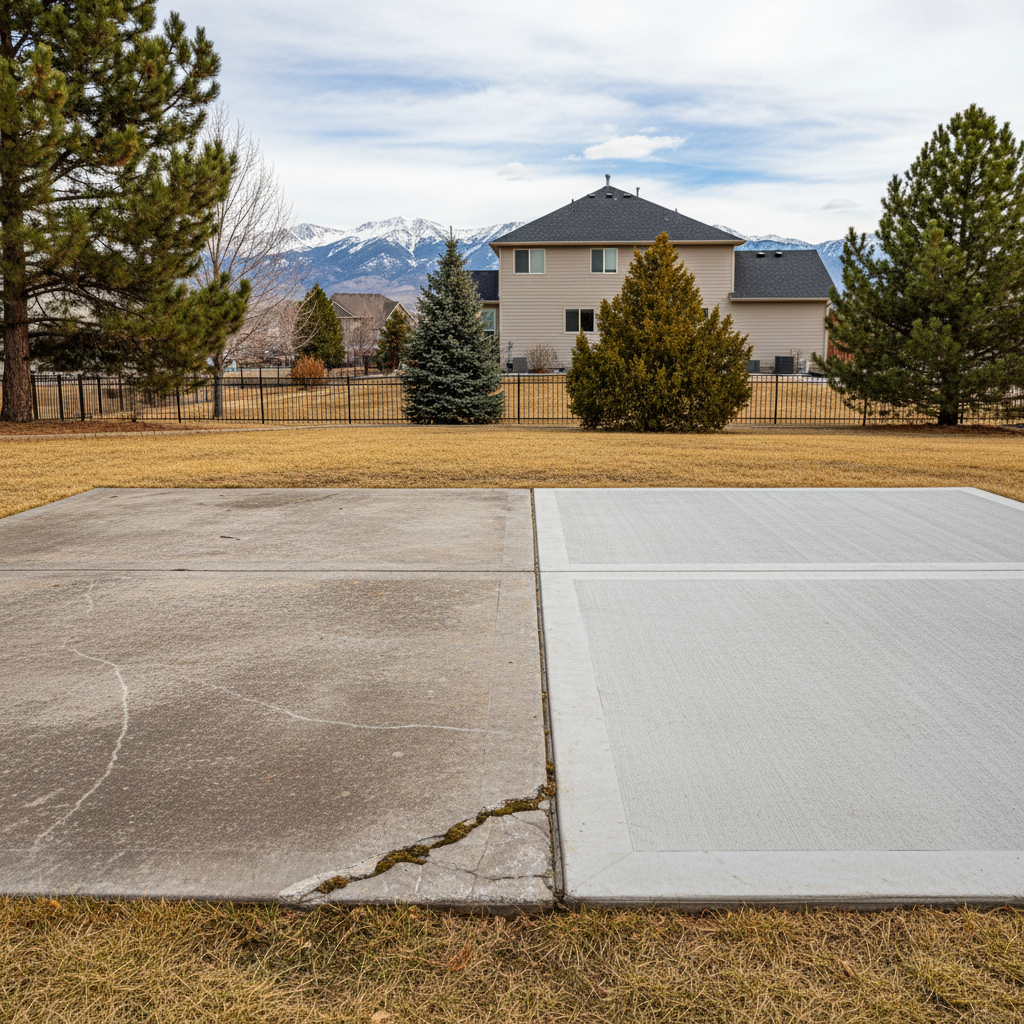
Your concrete's seen better days, huh? Maybe that driveway's turned into a tripping hazard, or your patio's got a nasty crack running right through it. When you're thinking about concrete repair, you generally have two big choices: lift and level what's already there, or just rip it all out and pour new stuff. I've seen both done plenty of times around Sandy, and honestly, each has its moment. Let's dig into what each option involves, so you can figure out what makes the most sense for your place.
Concrete Leveling (Slab Jacking / Polyurethane Injection)
This is usually the first thing I suggest for slabs that aren't quite even. Instead of tearing out the concrete, we just lift it back where it belongs. For years, folks called this 'mudjacking' — pumping a cement slurry under the slab. It worked, sure, but it was heavy and could get pretty messy. These days, we mostly use polyurethane injection, which is a much more modern approach.
- How it works: We drill small holes, about the size of a dime, right into the concrete. Then, we inject a high-density polyurethane foam underneath. This foam expands, filling any empty spots and gently pushing the slab back to its original height. And get this: it cures super fast.
- Cost: This is where leveling really shines. It's almost always way cheaper than replacing the concrete, often saving you 30-50%. Think about it: fewer materials, less labor, no demolition, and no hauling away old concrete.
- Durability: That foam is incredibly strong and stable. It won't wash away like soil or some of those old mudjacking slurries could. Plus, it fills voids completely, which really helps stop future settling. It's built to last for decades, often outliving the concrete itself.
- Maintenance: Once it's level, there isn't much upkeep specific to the leveling part. You'll still need to seal your concrete every few years, just like any other slab, you know?
- Appearance: This method brings your concrete back to its original look. If the slab itself is in decent shape (no major surface flaking or really bad cracks), it'll look great once it's level. We patch those small injection holes, and they blend in pretty well.
- Speed: It's quick. Most jobs are done in just a few hours, and you can usually walk or drive on the surface that same day. No waiting days for concrete to cure, which is a huge plus.
- Local Considerations: Here in Sandy, especially in older neighborhoods like those around Willow Creek, we often deal with expansive clay soils. These soils can swell and shrink with moisture changes, causing things to settle unevenly. Polyurethane injection is fantastic for filling these voids and stabilizing the slab against future movement from these tricky soil conditions.
Full Concrete Replacement
Sometimes, leveling just isn't going to cut it. If your concrete is completely busted up, severely flaked, or cracked into a million pieces, then replacement is really the only way to go.
- How it works: We break up the old concrete, haul it away, get the ground ready underneath (which might mean compacting the soil and adding gravel), set up forms, and then pour new concrete.
- Cost: This is generally the priciest option. You're paying for demolition, disposal, all new materials, and a lot more labor.
- Durability: A brand-new slab, put in correctly with good rebar or mesh, will be very durable. You're starting fresh, so you get its full lifespan.
- Maintenance: Like any new concrete, it needs proper curing, sealing, and a good cleaning now and then.
- Appearance: Well, it's new concrete. It'll look perfect, assuming it's poured right. You can also pick out new finishes, colors, or stamp patterns if you're looking for an upgrade.
- Speed: This takes a few days, not hours. There's demolition, getting the ground ready, pouring, and then a curing period (days to weeks) before you can put anything heavy on it.
- When it's the right choice: If your concrete is truly beyond repair — meaning it's crumbling, severely pitted, or has cracks that are too wide or just too many to patch effectively — then replacement is your best bet. If you want to change the layout, size, or finish of your concrete, then replacement is also the way to go.
My Recommendation for Sandy Homeowners
Look, if your concrete is mostly intact but just uneven, cracked in a few spots, or settling, I'm almost always going to lean towards concrete leveling with polyurethane injection. It's faster, way cheaper, less disruptive to your yard, and incredibly effective, especially with the soil challenges we sometimes face here in Utah.
You get a stable, level surface without all the headache and expense of a full tear-out. Plus, it's a more environmentally friendly choice since we're not sending tons of concrete to the landfill. Isn't that something?
However, if your concrete is truly falling apart, or if you're looking to completely redesign an area, then replacement is the only logical choice. You've really got to look at the overall condition of the slab. Don't just assume you need a whole new driveway if a good lift and fill can save you a bundle.
The best way to know for sure? Give us a call at Sandy Concrete Solutions. We can come out, take a look at your specific situation, and give you an honest assessment of whether leveling or replacement is the right move for your home. We'll walk you through the options and make sure you understand exactly what to expect.